
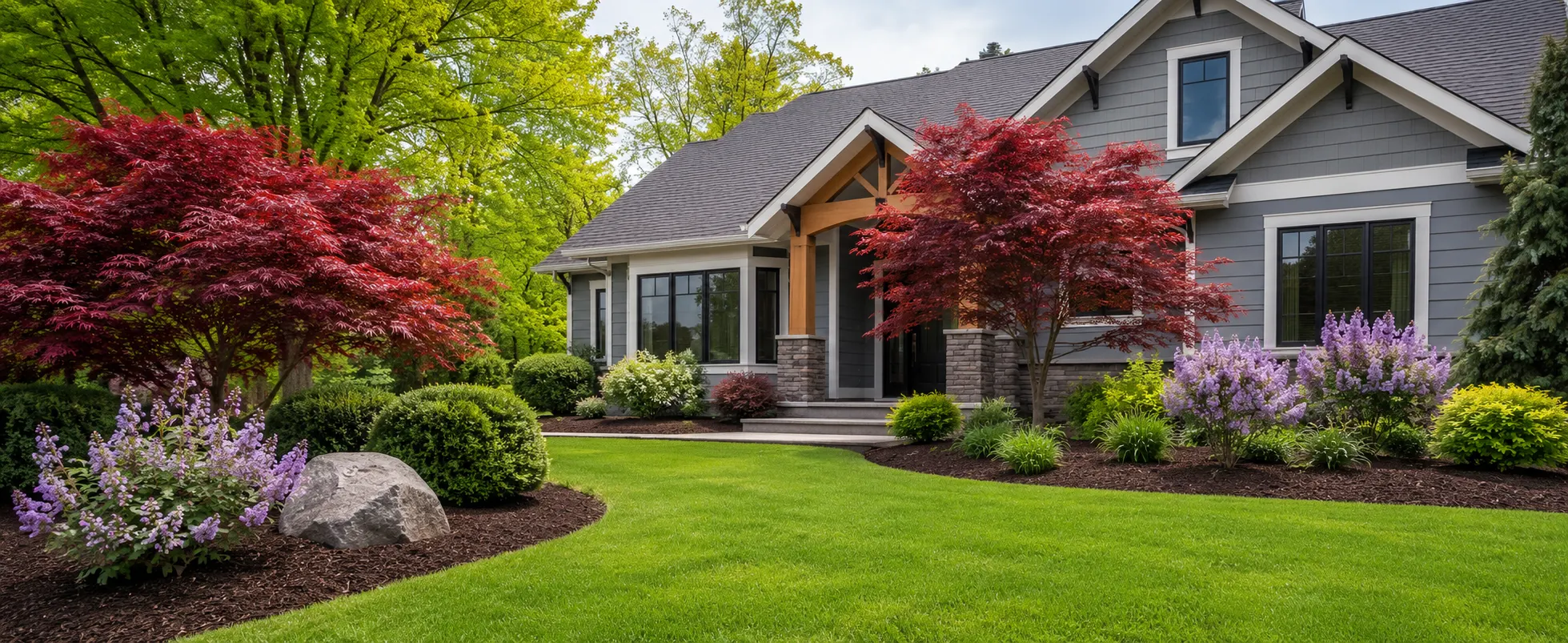
Lawn renovation
From thin and tired to thick and even.
Some lawns need more than a program. They need a reset. Renovation is the work of pulling a worn-out lawn back to a clean baseline — and giving it the conditions to actually take.
What we do
What renovation actually means.
A lawn renovation is not overseeding on top of a struggling lawn. It is a controlled reset: in many cases we dethatch to remove the accumulated mat of dead stems that's blocking water and seed, aerate to put new seed in real contact with soil, and topdress with compost to feed the soil where it's depleted and give new seed the organic matter it needs to establish. The result is a lawn that doesn't just look fuller for three weeks — it has the root depth to hold the gain through next summer.
- Bare and thin spot assessment
- Dethatching or core aeration
- Bare-patch reseeding and repair
- Compost topdressing where needed
- Overseeding with the right blend
- Watering schedule & follow-up
Why it matters
Why most renovations fail.
The standard renovation failure goes like this: a homeowner throws down seed in October, waters for a week, and watches the new grass come up beautifully. Then it disappears by July. The seed germinated; it just never developed a root system that could survive a Mid-Atlantic summer.
Real renovation is about the eight months after the seed goes down — not the eight days. We time the work to fall weather windows where rain is reliable and cool-season grasses are biologically primed to root deep, we top-dress with compost to build the soil rather than chase a quick green-up, and we follow the renovation through the following spring so the young grass has the time and room to fill in. That's why our renovations look better in year two than year one — the opposite of what most people experience.
The mechanical step underneath all of it is core aeration — opening the ground so seed and compost reach soil instead of perching on top of it. If a lawn is thin rather than genuinely worn out, aeration in Charles Town or Ashburn on its own may be all it needs.
Before & after
Drag to see the difference.
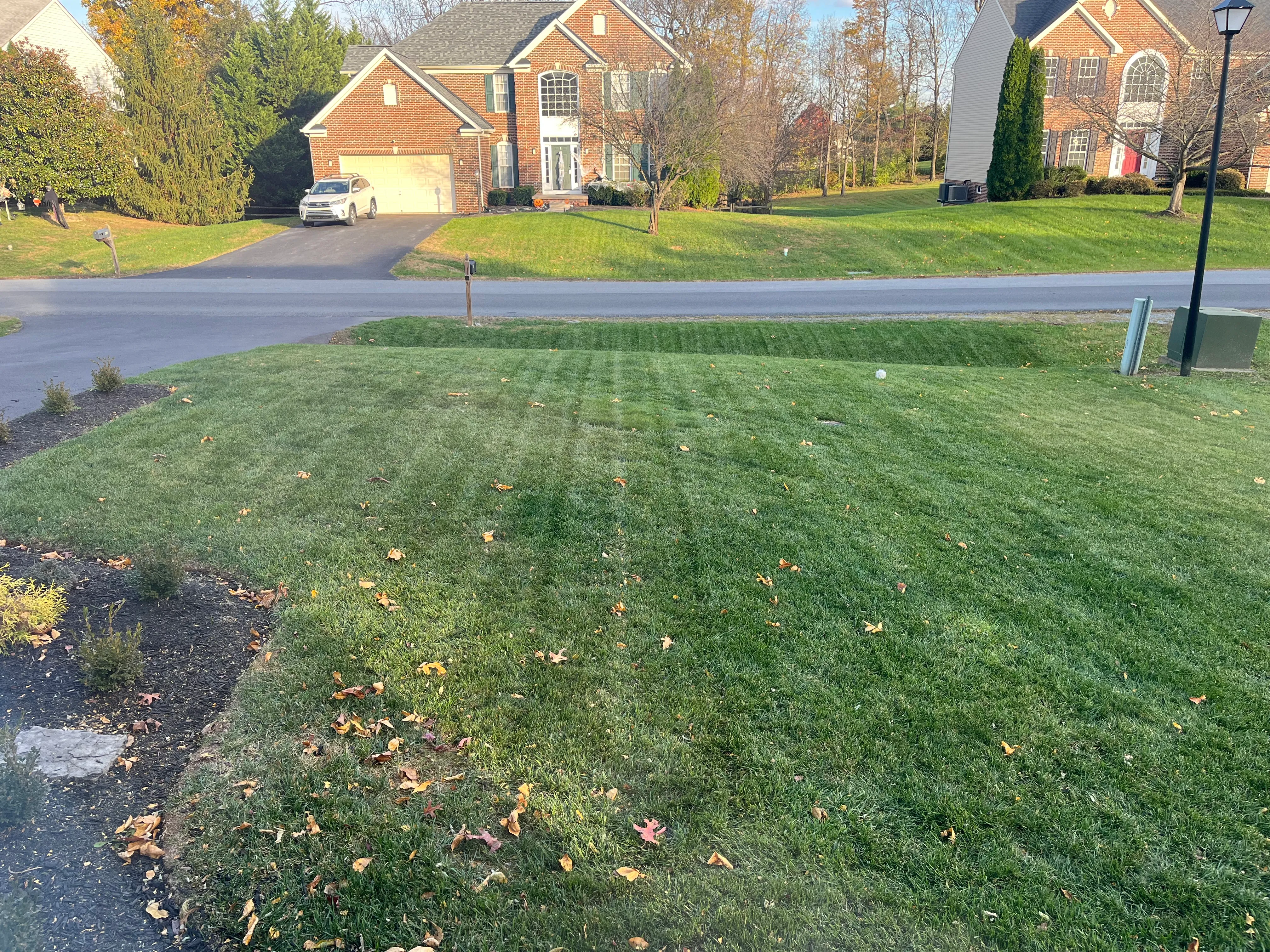
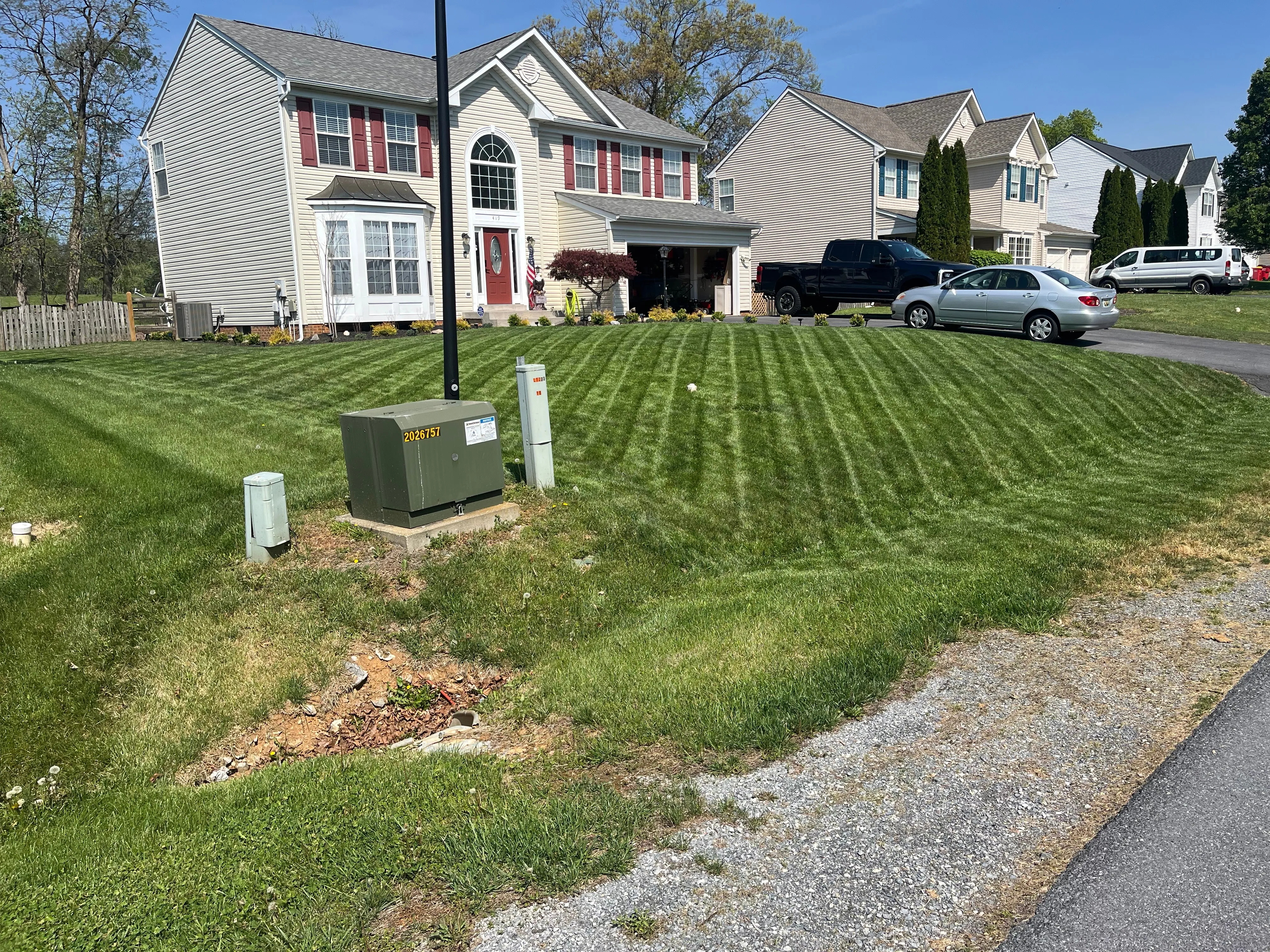
A renovation rebuilds a thin, tired lawn from the soil up. Drag the slider to compare the same lawn just after a renovation and one season later, once the new turf has filled in.
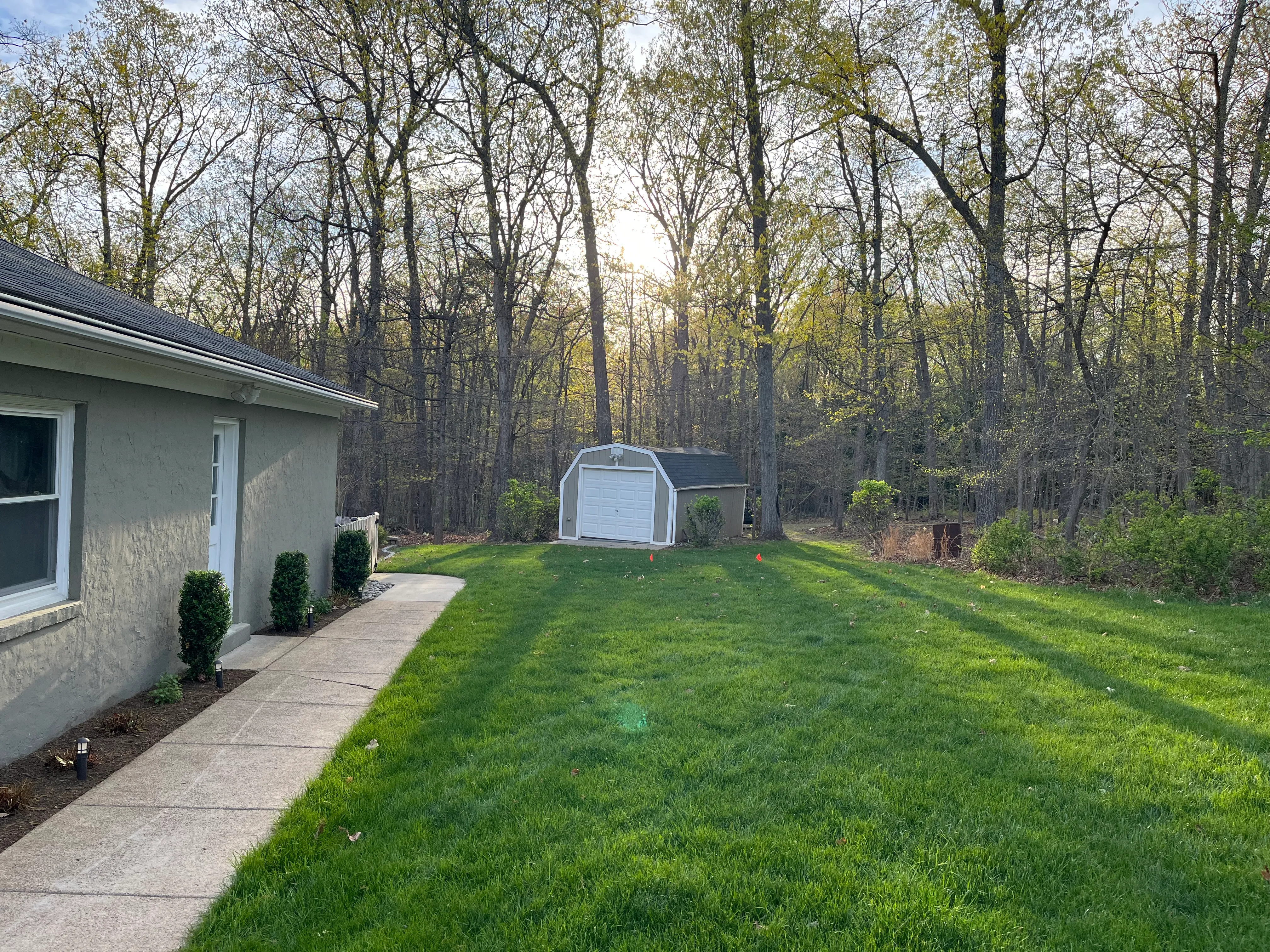
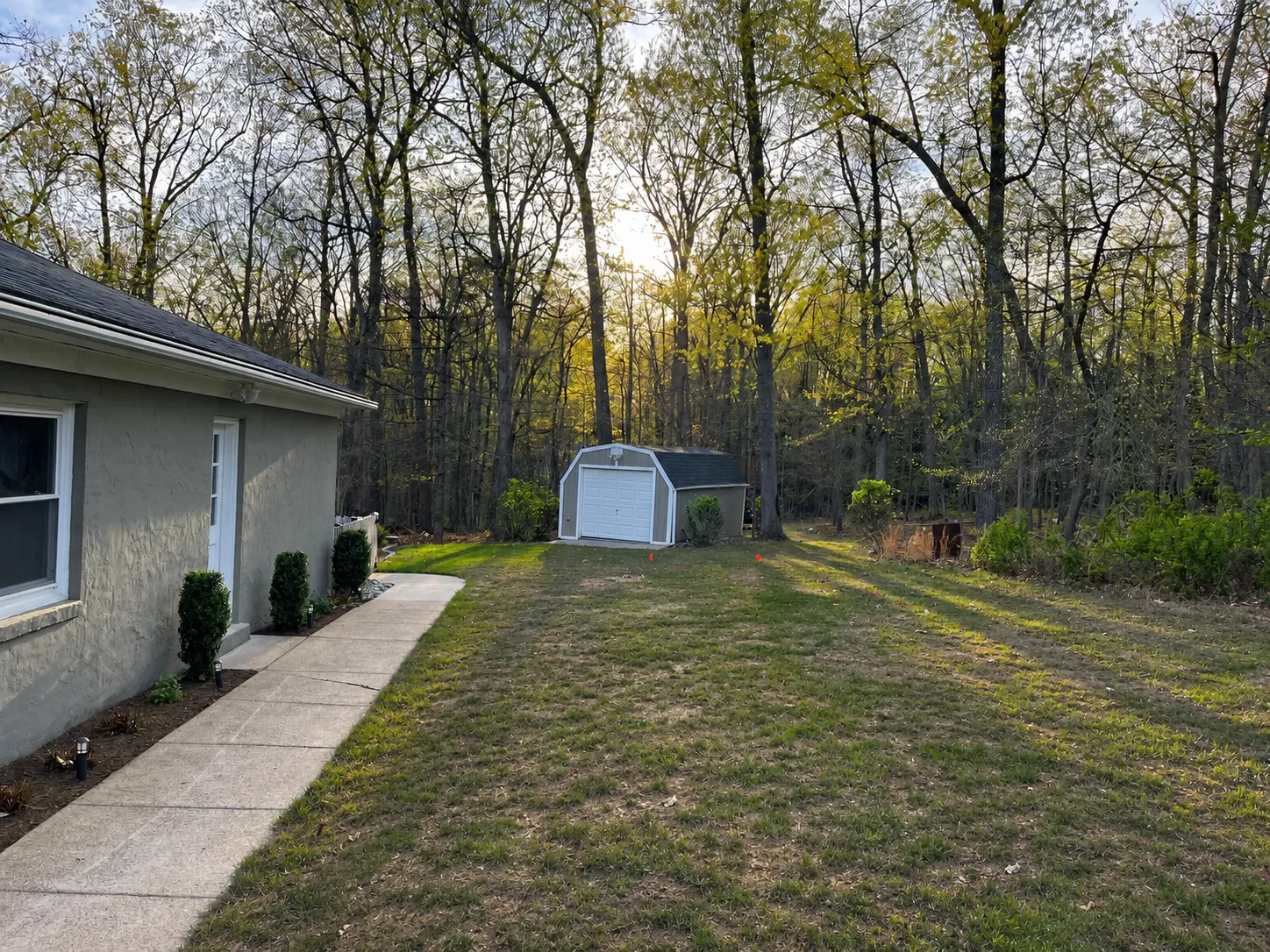 Before
 Local conditions
Lawn renovation in Ashburn and Charles Town.
Cool-season turf in the Mid-Atlantic lives or dies on a specific set of conditions — and renovating a lawn here means renovating for those conditions, not a generic blueprint.
Most of the lawns we renovate in Ashburn and the surrounding Loudoun County, Virginia are tall fescue blends — the cool-season grasses that hold up best in USDA hardiness zone 7a. They want a fall renovation, not a spring one: cooler nights, reliable September–October rain, and enough warm soil left to germinate before the cold sets in. Try the same work in May and the new grass dies in July.
Soils across Loudoun County, VA and Jefferson County, West Virginia lean clay-loam, which means compaction and poor drainage are usually a bigger problem than nutrients. A renovation here has to address the soil first — aerate and topdress with compost where it's depleted — before any seed will hold. Whether your property is in Charles Town or Ashburn, we renovate for what's actually under the grass.
Biweekly mowing · Ashburn, VA & Charles Town, WV
The only mowing we do — the Compliance Special.
Oxen Acres isn't a mowing service — our work is dedicated, one-property-at-a-time landscaping. But townhome and small-yard owners in Ashburn and Charles Town kept asking for one simple thing, so we built exactly one mowing option around it: a biweekly cut that keeps a small lawn tidy and HOA-compliant, with nothing else attached.
It runs April through November on a biweekly schedule only, for townhomes and yards under 1,500 square feet — a right-sized fit for slow-growing lawns and for owners or renters who just need to keep an HOA satisfied.
-
Built for small yards and HOAs
A dependable way to keep a small lawn tidy and HOA-compliant — ideal for slow-growing lawns, townhomes, and renters who don't want a full lawn program.
-
Biweekly is the whole point
Most services won't touch an every-other-week schedule. Biweekly is the only mowing we offer — so it's the one we've made our specialty.
-
A simple monthly service
Billed month to month across the April–November season — pay securely online each month, and stop whenever you need to.
Our process
How a lawn renovation job actually runs.
-
Assess and decide
Not every tired lawn needs renovation. Sometimes a program alone will recover the lawn over two seasons. We tell you honestly which is right for yours.
-
Prep the soil
Dethatch if thatch is choking the surface; aerate to get seed-to-soil contact; topdress with compost where the soil is exhausted.
-
Seed and feed the soil
Region-appropriate tall fescue blend at the right rate, compost top-dressing where the soil needs it, and clear establishment-watering instructions you can actually follow.
-
Follow through
Return visits to monitor germination, adjust the program around the new grass, and protect the gain into next spring.
Pricing
Renovation is quoted by the square foot.
Pricing depends on lot size, how much prep the lawn needs, and whether we're doing aeration-plus-overseed or a full topdressing renovation. A typical residential renovation in our area falls in a wide range — send a few photos and we'll send a ballpark within two business days, then confirm precisely on-site.
We always tell you whether renovation is the right move at all. If a lighter touch — aeration and overseeding over a couple of seasons — will get you to the same place without a full renovation, that's the recommendation you'll get. Honest first, salesperson second.
Get an Insta-QuoteCommon questions
About this service.
Don't see your question? Reach out — you'll get a ballpark range within two business days.
When's the right time to renovate?
Early fall, almost always. In our region, mid-August through mid-October is the window where new seed will establish reliably. Spring renovations sometimes work for small patches, but full-yard work in the spring runs straight into summer heat with shallow roots.
How much watering will I have to do?
Daily light watering for the first two to three weeks, then tapering down. We send a written watering schedule. If you have an irrigation system, we can dial it in for you; if not, sprinklers on timers are usually enough.
Do you dethatch every time?
No — only when there's a real thatch layer choking the surface. Once thatch passes about half an inch it blocks water and seed; under that, dethatching does more harm than good. We check the thatch depth at the walk-through and only dethatch when it will actually help the renovation take.
What about my dog?
Dogs are the most common reason renovations fail. We can protect a portion of the yard for the establishment window and stage the work to keep at least part of the lawn usable. We'll talk through what's realistic given your dog's habits during the walk-through.
Do you mow lawns?
One way only: the biweekly Compliance Special, for townhomes and yards under 1,500 square feet in Ashburn, VA and Charles Town, WV. It runs April through November and is billed as a monthly, month-to-month service — a simple way to keep a small lawn tidy and HOA-compliant. We don't offer weekly mowing or take on larger lawns; outside this one offer, our work is dedicated landscaping — design and install, mulch and bed maintenance, and lawn renovation.